A bottomhole assembly (BHA) can respond differently on the next well, even on the same pad. As directional tendencies change, teams need to reassess what that behavior means for the projected path and whether the next move could bring the well closer to an offset.
Corva’s Directional platform connects live monitoring with projection scenarios and anti-collision review, giving field and office personnel a shared basis for assessing those changes as drilling progresses.
Joshua McCleary and Khoa Tran explored these workflows in “Inside Corva’s Directional Drilling Workflows: Real-Time Monitoring, Projections & Anti-Collision.” Their discussion and Q&A examined how teams assess slide execution, interpret changing BHA tendencies, and evaluate risk ahead of the bit.
Tracking the Well as Conditions Change
As the well progresses, teams need to assess how it’s tracking against the plan and whether recent drilling behavior changes their expectations for the next interval.
Formation characteristics, drilling parameters, and tool condition can all influence the response. A projection informed by recent tendencies gives teams a way to consider what that behavior could mean farther ahead.
Corva’s monitoring and projection workflows make that review part of ongoing operations. Personnel can assess current well information alongside possible outcomes and revisit their assumptions as conditions change.
A Shared View for Field and Office
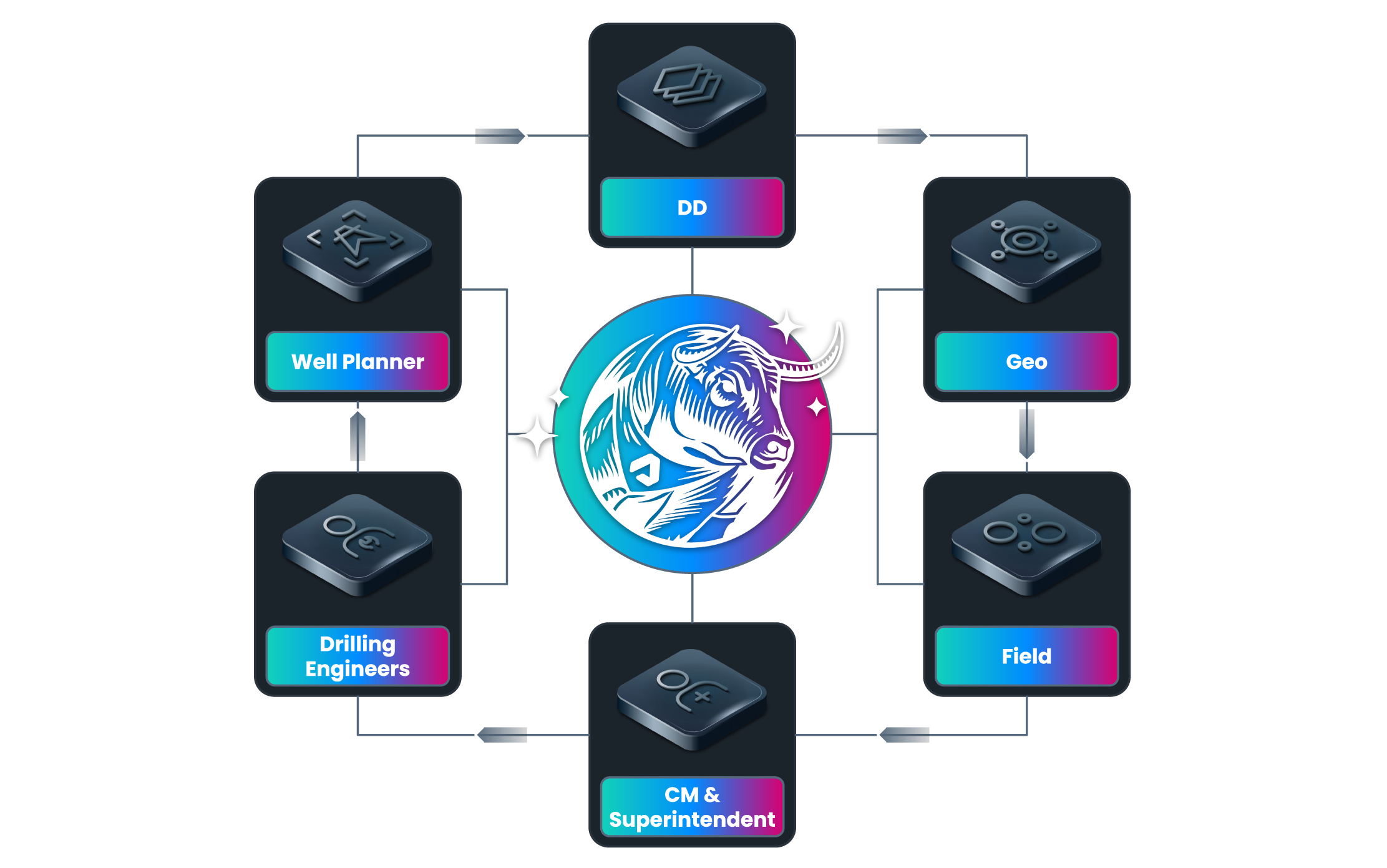
Directional drillers, drilling engineers, well planners, and geology teams each bring a different perspective to the well. When their understanding depends on separate emails, calls, or manually shared updates, keeping everyone aligned takes additional effort.
Corva brings those perspectives into a connected operational view. Personnel can review the same well progression and discuss potential next steps using shared directional context, giving conversations between the field and office a clearer starting point, with less time spent establishing which information is current.
Directional Support at the Rig and in the RTOC
A directional driller on location may be focused on one well, while a specialist in a real-time operations center (RTOC) may be overseeing several operations at once. Corva supports both settings with directional workflows that help personnel follow well progression and review potential next steps.
Automated projections, survey management, and anti-collision scanning support both operating models. Capabilities such as EDM parsing also reduce manual handling of well information.
Comparing Potential Paths Ahead
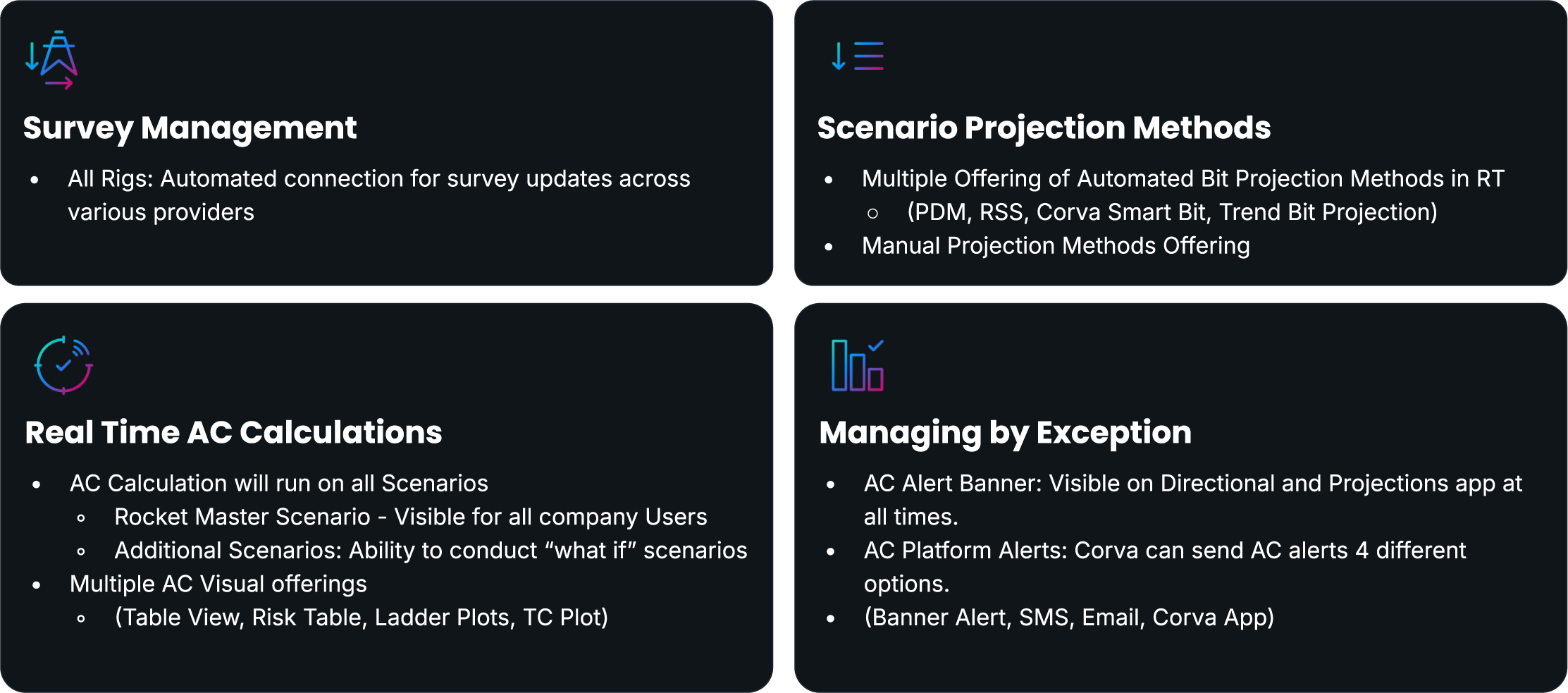
A change in observed build or turn rate can affect how teams evaluate the next interval. Corva’s automated and manual bit projections help users assess potential paths using the directional inputs relevant to that decision. Additional scenarios make it possible to compare different directional outcomes.
Anti-collision calculations run across the scenarios, connecting trajectory evaluation with the potential implications for nearby wells. That allows teams to consider the projected path and its anti-collision results together as they determine how to proceed.
Each projection remains an estimate informed by its selected inputs. Teams can review those estimates alongside current well information to assess the implications of each scenario.
Keeping Anti-Collision Concerns Visible
Corva provides multiple ways to review anti-collision information, including table views, risk tables, and ladder plots. An anti-collision alert banner keeps concerns visible within the Directional and Projections workflow, with additional alert options through SMS, email, and the Corva app.
Alert options support managing by exception by directing attention to conditions that need review. Combined with projection scenarios, they help personnel evaluate potential conflicts ahead of the current bit position and coordinate their response.
Geology Within the Directional Workflow
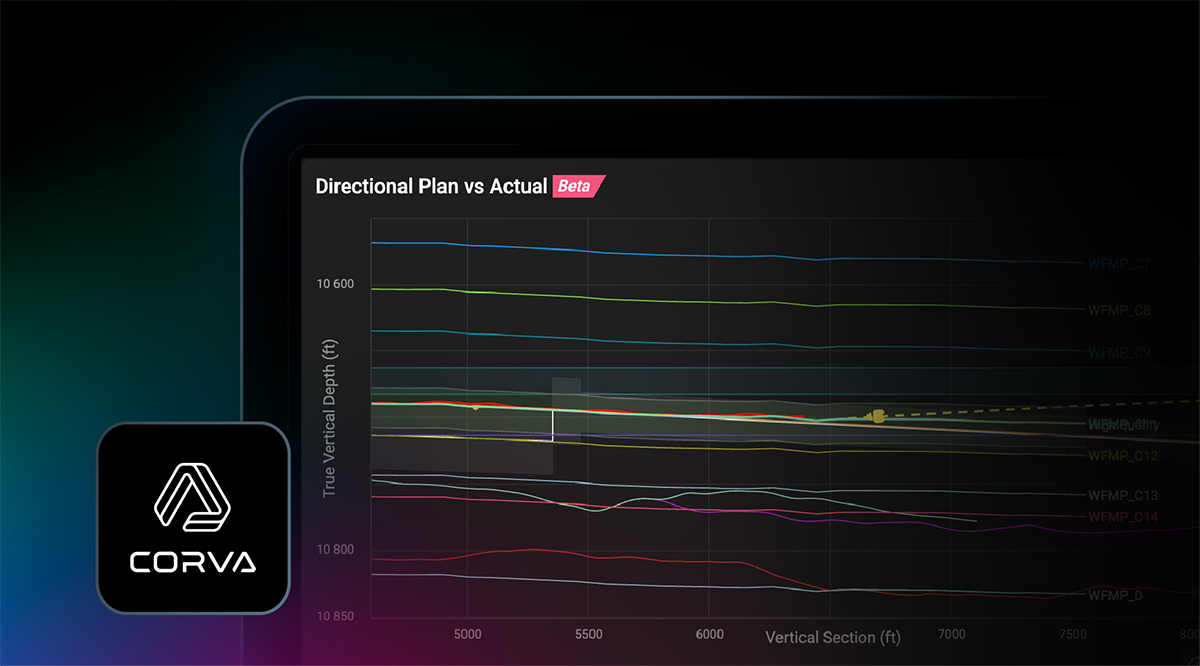
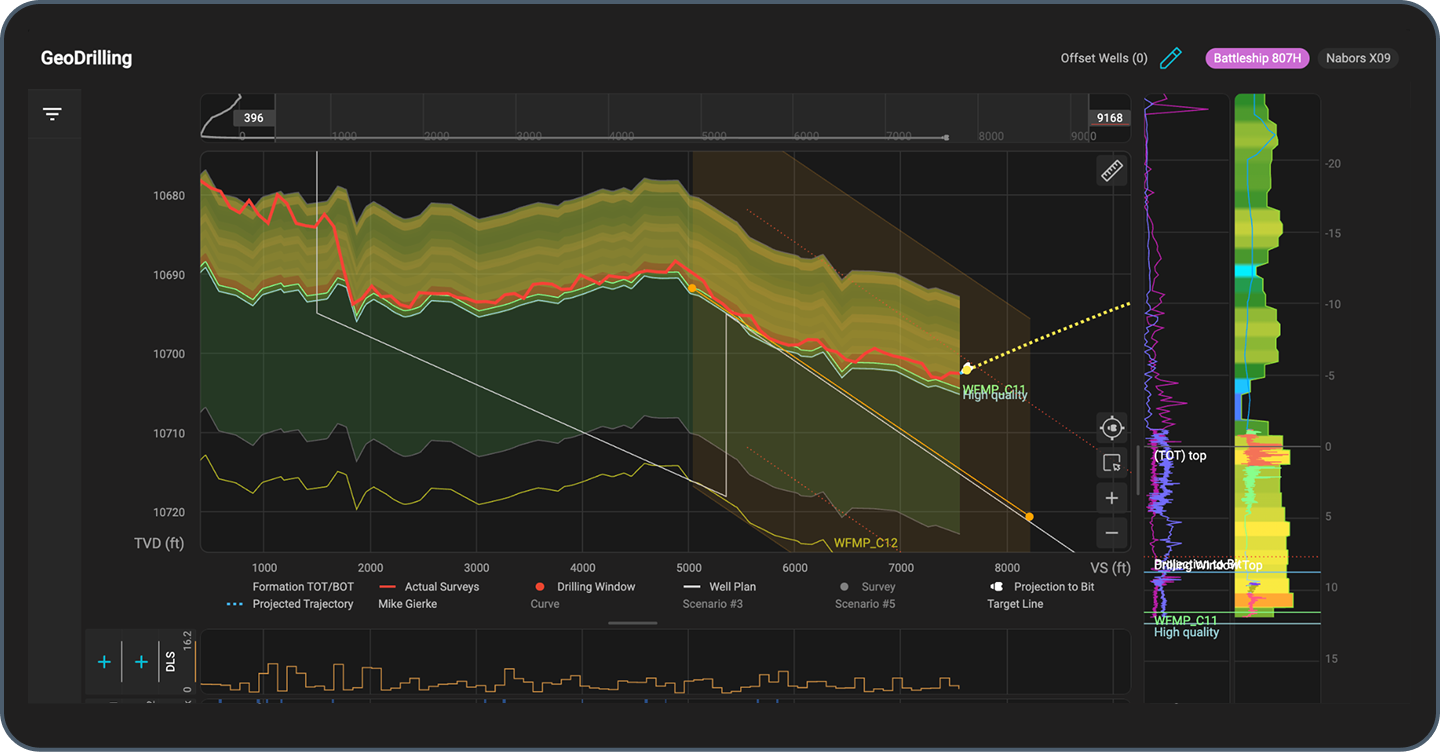
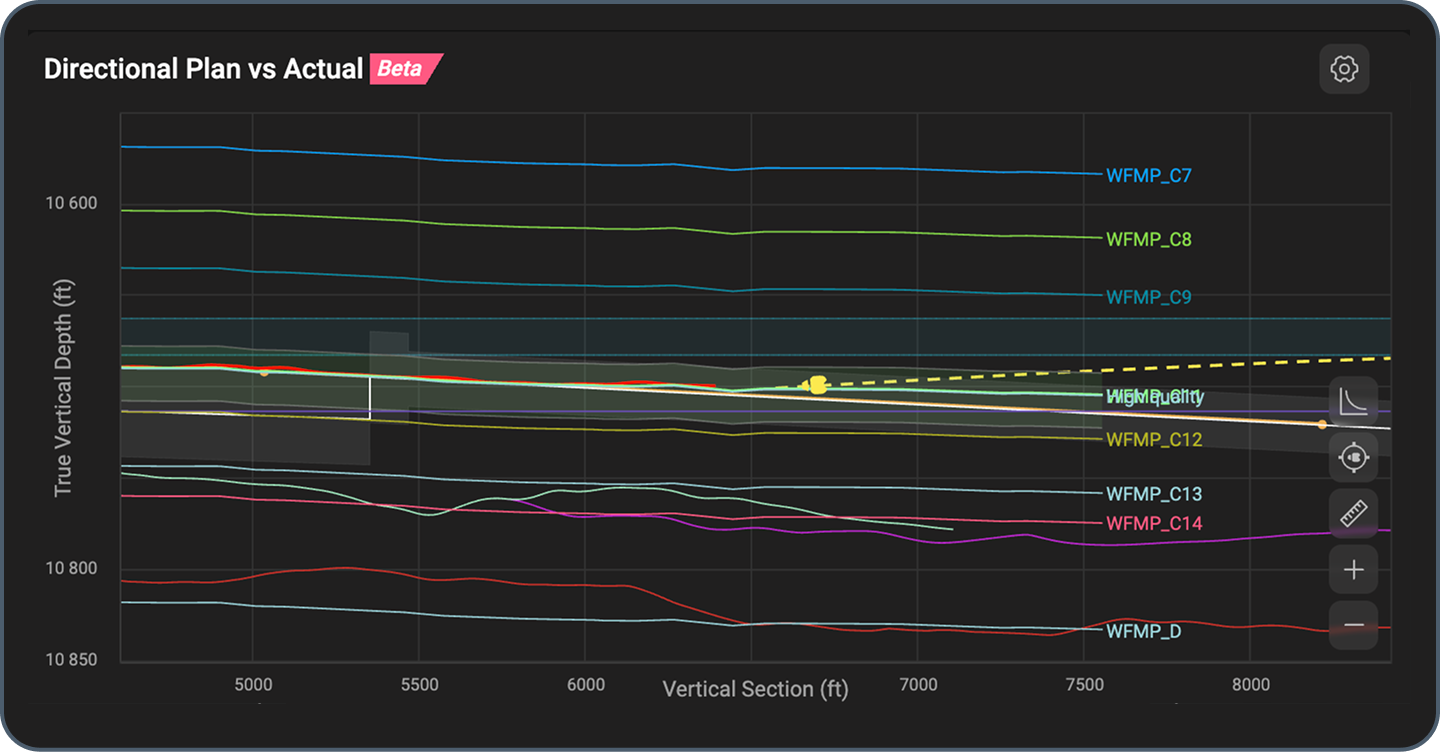
Corva’s Geo Integration supports real-time collaboration with the geology team. Viewing formation context alongside Directional Plan vs Actual gives personnel a shared basis for discussing the well’s trajectory as drilling progresses.
That connection helps directional and geology personnel evaluate the path ahead with a clearer understanding of the formations being drilled.
A Connected Approach to Drilling Decisions
Corva’s Directional workflows bring real-time well information, formation context, projection scenarios, and anti-collision monitoring into a shared operational view. Teams can assess changing drilling tendencies, compare potential paths, and evaluate nearby-well risks before determining the next move. That shared understanding helps personnel at the rig and in the office identify concerns earlier and coordinate their response as conditions change, with a clearer basis for deciding how to proceed.
Dive into the Webinar Q&A
Q: How do you recommend evaluating the effectiveness of the current slide, given that the DNI sensor is approximately 60 ft behind the bit?
A: In real time, there is no true way of measuring the effectiveness of the slide. Formation, Motor performance, parameters such as differential and weight on bit can be good indicators but doesn’t necessarily mean you will get the motor yields you are expecting. What we do take in consideration is the efficiency and accuracy of the slide based on the toolfaces collected from the slide. So in essence, how well was the DD able to maintain toolfaces in a given direction.
This Toolface information along with previous slide results, allows us to calculate and determine what the current slide is going to yield.
Q: Is there a performance analysis for RSSoutput when using different DC & TF?
A: Currently we have been partnering and working with Nabors Rig Cloud and designing and interface with Nabors rigs which will allow customers to directly send downlink commands and steering commands to the rigs remotely.
We are diligently working towards obtaining Downlink commands from RSS providers and as we progress, hope to obtain a connection allowing the users to see information such as RSS output.
Q: Can Users change targets manually?
A: Yes, Users have the ability to input Target lines, Drilling Windows, and if necessary surveys manually.
Q: Is there a post-run report?
A: We do have a Post run BHA Report in our BHA page under the well hub tab. Select the BHA you wish to view and in the top right corner you will find a printer icon. Here users can print both BHA’s and BHA performance reports.
Q: How can real-time drilling data and monitoring systems continuously identify and predict changes in BHA behavior and directional tendency while drilling, considering that the BHA response can change with formation characteristics, downhole structures, drilling parameters, and progressive tool wear and tear?
A: Great question. I think we have all been on pads where one well had one drilling tendency and we skid to the next well and it does the complete opposite. Some of the tools we designed in the projections and Anti-Collision app is a bit projection drilling tendency and also projection scenarios where you can utilize rotary tendencies. With these tools, you are able to select the last stand, 3 stands, or several. The application then takes this information and calculates an average build and turn rate, applying this logic to the bit.
Q: With Anti-Collision playing such an important role in wellbore monitoring, what has Corva done to ensure the accuracy of the AC calculations?
A: Corva’s A/C calculations are based on the Globally recognized standard (ISCWSA) and have been refined by our Technical Director of R&D. A/C Results have been compared to compass and various other A/C softwares with result being 2% or less in difference. Every A/C software will display a small margin of difference, as these calculations are typically well protected from competitors, so we will never match compass or other softwares exactly. What I can tell you is that Corva’s A/C calculation has been acknowledged and validated by multiple operators.
We also have case studies and incidents where 3rd party Directional softwares were missing offset wells in their data base, and Corva was able to identify this offset well and send alerts before a collision could occur.
Q: How are formation tops considered when determining motor or RSS output?
A: Within the Corva platform, there are a few analytical/directional applications such as our formation metrics, and slide roadmap that will compare formation tops to motor/RSS output.
Q: What are new ways to improve ROP when dealing with anticollision scenarios?
A: Performance is important and we're always striving for improvement. That said, when A/C becomes a factor and concerns for hitting another well come into play. The ability to effectively avoid the offset well takes priority over performance. What can do however is create scenarios the allow users to observe and monitor A/C risks ahead of their current hole position. As I demonstrated in the Webinar, creating scenarios that display 200 ft, 500 ft, 1,000 ft ahead of the bit allows operators to maintain performance. Operators can proactively search for potential risk in advance and can prevent scenarios where multiple check shots and reduced parameters are required to avoid a well.
See Corva’s Directional Workflows in Action
Download the full webinar recording to see Joshua McCleary and Khoa Tran demonstrate how real-time monitoring, projection scenarios, and anti-collision review support directional decisions as the well progresses.


 Blog
 Nov 24, 2026